


Showing posts with label 7th Semester. Show all posts
Showing posts with label 7th Semester. Show all posts
 NAMAN PATHAK

advance microcontroller and embeded system
Designing Embedded Systems With Pic Microcontrollers: Principles and Applications Book

>> DOWNLOAD
Publisher: Newnes | 2009 | ISBN: 1856177505 | 750 pages | PDF | 41,6 MB
This book is a hands-on introduction to the principles and practice of embedded system design using the PIC microcontroller. Packed with helpful examples and illustrations, it gives an in-depth treatment of microcontroller design, programming in both assembly language and C, and features advanced topics such as networking and real-time operating systems. It is accompanied by a CD-ROM containing copies of all programs and software tools used in the text and a `student' version of the C complier
Designing Embedded Systems with PIC Microcontrollers: Principles and Applications is ideal for students of electronics, mechatronics and computer engineering. Engineers in industry and informed hobbyists will also find this book a valuable resource when designing and implementing both simple and sophisticated embedded systems using the PIC Microcontroller


advance power electronics
Power Electronics and Instrumentation Engineering

>> DOWNLOAD
Modern Power Electronics and AC Drives Book

>> DOWNLOAD
power system protection
PRACTICAL POWER SYSTEM PROTECTION

>> DOWNLOAD


>> DOWNLOAD
Power System Protection: Volumes 1 to 4

>> DOWNLOAD
POWER SYSTEM PROTECTION

>>DOWNLOAD
inter connected power system
Electric Power System Basics: For the Nonelectrical Professional

>> DOWNLOAD
Power System Control and Stability

>>DOWNLOAD
Electrical Power Systems

>> DOWNLOAD LINK -1
>> DOWNLOAD LINK - 2
Electrical Power Systems
by D.Das
New Age International | 2007 | ISBN: 8122425154 | 485 pages | File type: PDF | 5,4 mb
This book will give readers a thorough understanding of the fundamentals of power system analysis and their applications. Both the basic and advanced topics have been thoroughly explained and supported through several solved examples.
Important Features of the Book
* Load Flow and Optimal System Operation have been discussed in detail.
* Automatic Generation Control (AGC) of Isolated and Interconnected Power Systems have been discussed and explained clearly.
* AGC in Restructured Environment of Power System has been Introduced.
* Sag and Tension Analysis have been discussed in detail.
* Contains over 150 illustrative examples, practice problems and objective-type questions, that will assist the reader.
With all these features, this is an indispensable text for graduate and postgraduate electrical engineering students. GATE, AMIE and UPSC engineering services along with practicing engineers would also find this book extremely useful.
this book extremely useful.
GTU 7th Semester Mobile Computing Books
Here are the Books for the Mobile Computing Subject for 7th Semester GTU.
Mobile Computing
Asoke K Talukder, Hasan Ahmed, Roopa Yavagal
Asoke K Talukder, Hasan Ahmed, Roopa Yavagal

Price: Rs 425
ISBN: 9780070144576
Pub Date: JUL-10
Publish Status: In Stock
Copyright Year: 2010
NOTE : AFTER CLICKING ON THIS DOWNLOAD BUTTON YOU WILL BE REDIRECT TO
>> DOWNLOAD
J2ME: The Complete Reference
James Keogh
James Keogh
 ISBN: 9780070534155
Pub Date: MAY-03
Publish Status: In Stock
Copyright Year: 2003
>> DOWNLOAD
Compiler Design All Books
Here are the Books for the Compiler Design Subject for 7th Semester GTU.

 Hardcover: 816 pages
Publisher: Mcgraw-Hill College (May 1985)
Language: English
ISBN-10: 0070651612
ISBN-13: 978-0070651616
Compilers, principles, techniques, and tools
Author : Alfred V. Aho, Ravi Sethi, Jeffrey D. Ullman
| Publisher | Addison-Wesley, 1986 |
| ISBN | 0201100886, 9780201100884 |
| Length | 796 pages |
The Theory And Practice Of Compiler Writing
Author : Jean-Paul Tremblay, P. G. Sorenson (in .djvu format)
Publisher: Mcgraw-Hill College (May 1985)
Language: English
ISBN-10: 0070651612
ISBN-13: 978-0070651616
Note : It requires .djvu Viewer. Download .djvu viewer from here
| >> DOWNLOAD | ||
GTU 7th Semester Embedded System Books
Here are the Books for the Embedded Systen Subject for 7th Semester GTU.

>> DOWNLOAD
About :
This exciting new book presents the traditionally distinct fields of software and hardware design in a new unified approach. It covers trends and challenges, introduces the design and use of single-purpose processors ("hardware") and general-purpose processors ("software"), describes memories and buses, illustrates hardware/software tradeoffs using a digital camera example, and discusses advanced computation models, controls systems, chip technologies, and modern design tools.
Whether a student or working professional, readers of this outstanding new book will learn how to look at embedded systems in a whole new way, one that allows them to build modern embedded systems having both hardware and software.
"Software and hardware cannot be considered independently today. They are interwoven on all levels of design flow from requirements to product specification, to manufacturing. EMBEDDED SYSTEM DESIGN is an excellent text that offers a unified approach to software and hardware concepts and design techniques. A necessary text for the second course in software engineering, computer organization, or system design".

Embedded System Design: A Unified Hardware/Software Introduction
Author : Frank Vahid , Tony Givargis.

- Hardcover: 352 pages
- Publisher: Wiley; New edition edition (October 17, 2001)
- Language: English
- ISBN-10: 0471386782
- ISBN-13: 978-0471386780
- Product Dimensions: 9.4 x 7.7 x 1 inches
>> DOWNLOAD
About :
Product Description
This book introduces a modern approach to embedded system design, presenting software design and hardware design in a unified manner. It covers trends and challenges, introduces the design and use of single-purpose processors ("hardware") and general-purpose processors ("software"), describes memories and buses, illustrates hardware/software tradeoffs using a digital camera example, and discusses advanced computation models, controls systems, chip technologies, and modern design tools. For courses found in EE, CS and other engineering departments.
From the Back Cover
A MODERN APPROACH TO THE DESIGN OF EMBEDDED COMPUTING SYSTEMSIn today's world, embedded systems are everywhere—homes, offices, cars, factories, hospitals, planes, and consumer electronics. Their huge numbers and new complexity calls for a new design approach, one that emphasizes high-level tools and hardware/software tradeoffs, rather than low-level assembly-language programming and logic design.This exciting new book presents the traditionally distinct fields of software and hardware design in a new unified approach. It covers trends and challenges, introduces the design and use of single-purpose processors ("hardware") and general-purpose processors ("software"), describes memories and buses, illustrates hardware/software tradeoffs using a digital camera example, and discusses advanced computation models, controls systems, chip technologies, and modern design tools.
Whether a student or working professional, readers of this outstanding new book will learn how to look at embedded systems in a whole new way, one that allows them to build modern embedded systems having both hardware and software.
"Software and hardware cannot be considered independently today. They are interwoven on all levels of design flow from requirements to product specification, to manufacturing. EMBEDDED SYSTEM DESIGN is an excellent text that offers a unified approach to software and hardware concepts and design techniques. A necessary text for the second course in software engineering, computer organization, or system design".
Embedded Linux
Author : Craig Hollabaugh
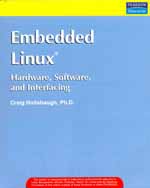
- ISBN:9788177584356
- Pages:432
- Imprint:AW Professional
- Binding:Paperback
>> DOWNLOAD
Embedded Linux will help the user: select an Embedded Linux platform based on hardware requirements; build and boot a custom Linux kernel for the platform; remote debug programs running on the platform using GNU tools; connect data acquisition and control electronics/peripherals using the platforms serial, parallel, USB, I/O port and I2C interfaces; interface the peripherals to the kernel and applications using modules; collect, control, store and present data via open source protocols and applications; and analyze Embedded Linux vendor product offerings.
Fundamentals of Embedded Software: Where C and Assembly Meet
Author : Daniel Lewis

ISBN-10: 0130615897
ISBN-13: 9780130615893 Publisher: Prentice Hall
Copyright: 2002
Format: Paper; 266 pp
Published: 11/13/2001
Status: Instock
ISBN-13: 9780130615893 Publisher: Prentice Hall
Copyright: 2002
Format: Paper; 266 pp
Published: 11/13/2001
Status: Instock
>> DOWNLOAD
Description
For sophomore-level courses in Assembly Language Programming in Computer Science, Embedded Systems Design, Real-Time Analysis, Computer Engineering, or Electrical Engineering curricula. Requires prior knowledge of C, C++, or Java.
This book is intended to provide a highly motivating context in which to learn procedural programming language. Using a non-product specific approach and a programming (versus hardware) perspective, this text lays a foundation that supports the multi-threaded style of programming and high-reliability requirements of embedded software. Reflecting current industrial applications and programming practice, it focuses on the more modern 32-bit protected mode processors and on C as the dominant programming language—with coverage of assembly and how it can be used in conjunction with, and support of, C.
This book is intended to provide a highly motivating context in which to learn procedural programming language. Using a non-product specific approach and a programming (versus hardware) perspective, this text lays a foundation that supports the multi-threaded style of programming and high-reliability requirements of embedded software. Reflecting current industrial applications and programming practice, it focuses on the more modern 32-bit protected mode processors and on C as the dominant programming language—with coverage of assembly and how it can be used in conjunction with, and support of, C.
GTU 7th Semester Advance Computing Books
Here are the Books for the Advance Computing Subject for 7th Semester GTU.

>> DOWNLOAD
Cloud Computing For Dummies begins by debunking Cloud Computing - providing a clear definition from the utility computing standpoint then moves into delivering practical guidance on delivering and managing cloud computing services in an effective and efficient manner presenting a proactive and pragmatic approach to implementing cloud computing in any organization. IT managers and staff will find the book most useful in helping them understand the benefits and challenges of cloud computing, how to select a service and getting it up and running. The book also addresses security concerns.

ISBN13 : 9788126527229 Product Group : BWSTM
>> DOWNLOAD
Grid computing appears to be a promising trend for three reasons: (1) its ability to make more cost-effective use of a given amount of computer resources, (2) as a way to solve problems that can't be approached without an enormous amount of computing power, and (3) because it suggests that the resources of many computers can be cooperatively and perhaps synergistically harnessed and managed as a collaboration toward a common objective. A number of corporations, professional groups, university consortiums, and other groups have developed or are developing frameworks and software for managing grid computing projects. The European Community (EU) is sponsoring a project for a grid for high-energy physics, earth observation, and biology applications. In the United States, the National Technology Grid is prototyping a computational grid for infrastructure and an access grid for people.
| CLOUD COMPUTING FOR DUMMIES |

| ISBN13 : 9788126524877 |
| Product Group : WTECH |
| Series : DUMMIES |
| Product Line : TA |
| Pages : 332 |
| Type : Paperback |
| Release Date : December 2009 |
>> DOWNLOAD
About
Cloud Computing For Dummies begins by debunking Cloud Computing - providing a clear definition from the utility computing standpoint then moves into delivering practical guidance on delivering and managing cloud computing services in an effective and efficient manner presenting a proactive and pragmatic approach to implementing cloud computing in any organization. IT managers and staff will find the book most useful in helping them understand the benefits and challenges of cloud computing, how to select a service and getting it up and running. The book also addresses security concerns.
GRID COMPUTING: MAKING THE GLOBAL INFRASTRUCTURE A REALITY

| Series : WSE | |||||
| Product Line : J | |||||
| Pages : 1060 | |||||
| Type : Paperback | |||||
| Release Date : July 2010 |
>> DOWNLOAD
About
Grid computing appears to be a promising trend for three reasons: (1) its ability to make more cost-effective use of a given amount of computer resources, (2) as a way to solve problems that can't be approached without an enormous amount of computing power, and (3) because it suggests that the resources of many computers can be cooperatively and perhaps synergistically harnessed and managed as a collaboration toward a common objective. A number of corporations, professional groups, university consortiums, and other groups have developed or are developing frameworks and software for managing grid computing projects. The European Community (EU) is sponsoring a project for a grid for high-energy physics, earth observation, and biology applications. In the United States, the National Technology Grid is prototyping a computational grid for infrastructure and an access grid for people.
GTU 7th Semester CE / IT / CSE Books
Adavnce .NET Technology
Here are the Books for the Advance .NET Technology Subject for 7th Semester GTU.
By Andrew Troelsen

>>DOWNLOAD
Pro VB 2008 and the .NET 3.5 Platform
By Andrew Troelsen

>>DOWNLOAD
Professional Visual Basic
ISBN: 978-0-470-19136-1
Paperback
1464 pages
May 2008
>>DOWNLOAD
ABOUT
The 2008 version of Visual Basic is tremendously enhanced and introduces dramatic new concepts, techniques, and features to this popular object-oriented language. Written by an elite author team, this comprehensive resource provides a clear and concise approach to using VB 2008 in the ever-expanding .NET world. This book focuses on using the latest and most powerful tools from the Microsoft arsenal within your Visual Basic solutions. You ll examine everything from the .NET Framework to the best practices for deploying .NET applications to database access and integrating with other technologies.
Pro C# 2008 and the .NET 3.5 Platform
By Andrew Troelsen

ABOUT
The first edition of this book was released at the 2001 Tech Ed conference in Atlanta, Georgia. Since that time, this text has been revised, tweaked, and enhanced to account for the changes found within each release of the .NET platform (1.1, 2.0, 3.0 and now 3.5).
.NET 3.0 was more of an augmentative release, essentially providing three new APIs: Windows Presentation Foundation (WPF), Windows Communication Foundation (WCF) and Windows Workflow Foundation (WF). As you would expect, coverage of the "W's" has been expanded a great deal in this version of the book from the previous Special Edition text.
Unlike .NET 3.0, .NET 3.5 provides dozens of C# language features and .NET APIs. This edition of the book will walk you through all of this material using the same readable approach as was found in previous editions. Rest assured, you'll find detailed coverage of Language Integrated Query (LINQ), the C# 2008 language changes (automatic properties, extension methods, anonymous types, etc.) and the numerous bells and whistles of Visual Studio 2008.
Professional C#
ISBN: 978-0-470-19137-8
Paperback
1848 pages
March 2008
Caution : Disable Any Type of Accelerator to download. Use only browser download.
>>DOWNLOAD
ABOUT
Professional C# 2008 starts by reviewing the overall architecture of .NET in Chapter 1 in order to give you the background you need to be able to write managed code. After that the book is divided into a number of sections that cover both the C# language and its application in a variety of areas.
Part I: The C# Language gives a good grounding in the C# language itself. This section doesn’t presume knowledge of any particular language, although it does assume you are an experienced programmer. You start by looking at C#’s basic syntax and data types, and then explore the object-oriented features of C# before moving on to look at more advanced C# programming topics.
Part II: Visual Studio looks at the main IDE utilized by C# developers world-wide: Visual Studio 2005. The two chapters in this section look at the best way to use the tool to build applications based upon either the .NET Framework 2.0 or 3.0. In addition to this, this section also focuses on the deployment of your projects.
Part III: Base Class Libraries looks at the principles of programming in the .NET environment. In particular, you look at security, threading localization, transactions, how to build Windows services, and how to generate your own libraries as assemblies.
Part IV: Data looks at accessing databases with ADO.NET and LINQ, and at interacting with directories and files. This part also extensively covers support in .NET for XML and on the Windows operating system side, and the .NET features of SQL Server 2008. Within the large space of LINQ, particular focus is put on LINQ to SQL and LINQ to XML.
Part V: Presentation focuses on building classic Windows applications, which are called Windows Forms in .NET. Windows Forms are the thick-client version of applications, and using .NET to build these types of applications is a quick and easy way of accomplishing this task. In addition to looking at Windows Forms, you take a look at GDI+, which is the technology you will use for building applications that include advanced graphics. This section also covers writing components that will run on Web sites, serving up Web pages. This covers the tremendous number of new features that ASP.NET 3.5 provides. Finally, this section also shows how to build applications based upon the Windows Presentation Foundation and VSTO.
Part VI: Communication covers Web services for platform-independent communication, .NET Remoting for communication between .NET clients and servers, Enterprise Services for the services in the background, and DCOM communication. With Message Queuing asynchronous, disconnected communication is shown. This section also looks at utilizing the Windows Communication Foundation and the Windows Workflow Foundation.
Part VII: Appendices (Online): This section includes three appendices focused on how to build applications that take into account the new features and barriers found in Windows Vista. Also, this section looks at the upcoming ADO.NET Entities technology and how to use this new technology in your C# applications.Professional VB.NET, 2nd Edition
ISBN: 978-0-7645-4400-2
Paperback
1032 pages
April 2002
About
.NET is designed to provide a new environment within which you can develop almost any application to run on Windows (and possibly in the future on other platforms). Visual Basic .NET (VB.NET) is likely to be a very popular development tool for use with this framework. VB.NET is a .NET compliant language and, as such, has (except for legacy reasons) almost identical technical functionality as the new C# language and Managed Extensions for C++. Using VB.NET, you can develop a dynamic Web page, a component of a distributed application, a database access component, or a classic Windows desktop application.
In order to incorporate Visual Basic into the .NET Framework, a number of new features have been added to it. In fact, the changes are so extensive that VB.NET should be viewed as a new language rather than simply as Visual Basic 7. However, these changes were necessary to give developers the features that they have been asking for: true object orientated programming, easier deployment, better interoperability, and a cohesive environment in which to develop applications.
What does this book cover?
In this book, we cover VB.NET virtually from start to finish: We begin by looking at the .NET Framework, and end by looking at best practices for deploying .NET applications. In between, we look at everything from database access to integration with other technologies such as XML, along with investigating the new features in detail. You will see that VB.NET has emerged as a powerful yet easy to use language that will allow you to target the Internet just as easily as the desktop.
This book explains the underlying philosophy and design of the .NET Framework and Common Language Runtime (CLR) and explains the differences between Visual Basic 6 and Visual Basic .NET.
You will learn how to
Who is this book for?
This book is aimed at experienced Visual Basic developers who want to make the transition to VB.NET.
What do you need to use this book?
Although it is possible to create VB.NET applications using the command lines tools contained in the .NET Framework SDK, you will need Visual Studio .NET (Professional or higher), which includes the .NET Framework SDK, to use this book to the full.
Here are some additional notes on what you may need:
In order to incorporate Visual Basic into the .NET Framework, a number of new features have been added to it. In fact, the changes are so extensive that VB.NET should be viewed as a new language rather than simply as Visual Basic 7. However, these changes were necessary to give developers the features that they have been asking for: true object orientated programming, easier deployment, better interoperability, and a cohesive environment in which to develop applications.
What does this book cover?
In this book, we cover VB.NET virtually from start to finish: We begin by looking at the .NET Framework, and end by looking at best practices for deploying .NET applications. In between, we look at everything from database access to integration with other technologies such as XML, along with investigating the new features in detail. You will see that VB.NET has emerged as a powerful yet easy to use language that will allow you to target the Internet just as easily as the desktop.
This book explains the underlying philosophy and design of the .NET Framework and Common Language Runtime (CLR) and explains the differences between Visual Basic 6 and Visual Basic .NET.
You will learn how to
- Develop applications and components using Visual Studio .NET
- Effectively apply inheritance and interfaces when designing objects and components
- Organize your code using namespaces
- Handle errors using the Try...Catch...Finally structure
- Access data using ADO.NET and bind controls to the underlying data sources
- Create Windows applications and custom Windows controls
- Interoperate with COM and ActiveX components
- Create transactional and queuing components
- Use .NET Remoting to send serialized objects between clients and servers
- Create Windows Services
- Use VB.NET to access information on the Web
- Create and consume Web Services
- Secure your applications and code using the tools provided in the .NET Framework SDK
- Arrange your applications and libraries in assemblies and deploy them using Visual Studio .NET
Who is this book for?
This book is aimed at experienced Visual Basic developers who want to make the transition to VB.NET.
What do you need to use this book?
Although it is possible to create VB.NET applications using the command lines tools contained in the .NET Framework SDK, you will need Visual Studio .NET (Professional or higher), which includes the .NET Framework SDK, to use this book to the full.
Here are some additional notes on what you may need:
- Some chapters make use of SQL Server 2000. However, you can also run the example code using MSDE (Microsoft Data Engine), which ships with Visual Studio .NET.
- Several chapters make use of Internet Information Services (IIS). IIS ships with Windows 2000 Server, Windows 2000 Professional, and Windows XP, although it is not installed by default.
- Chapter 18 makes use of MSMQ to work with queued transactions. MSMQ ships with Windows 2000 Server, Windows 2000 Professional, and Windows XP, although it is not installed by default.
C# The Basic
Author : Vijay Mukhi

| Title: | C# The Basics |
| Publisher: | BPB PUBLICATIONS |
| Author: | Vijay Mukhi S |
| Edition: | Paperback |


Professional ASP.NET 4 in C# and VB

>> DOWNLOAD PART - 1
>> DOWNLOAD PART - 2
ASP.NET 3.5 Step By Step

>> DOWNLOAD
GTU 7th Semester Advance Java Books
Here are the Books for the Advance Java Subject for 7th Semester GTU.
| The Complete Reference J2EE |
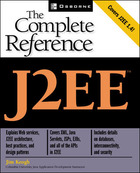
| ISBN: 9780070529120 Pages: 928 Pub Date: OCT-02 Publish Status: In Stock Copyright Year: 2002 |
>> DOWNLOAD
About Book
The Ultimate Resource on Java 2 Platform, Enterprise Edition
Develop robust, industrial-strength J2EE applications that take advantage of the efficiencies of distributive, Web services technology. J2EE: The Complete Reference explains the J2EE architecture and Web services, covers J2EE's massive collection of APIs, and presents strategies for designing and building J2EE components. Inside, you'll find coverage of Java Database Connection (JDBC), Java Servlets, Java ServerPages (JSPs), Enterprise Java Beans (EJBs), interconnectivity, and much more. This resource is essential for every developer working with J2EE and Web services.
Develop robust, industrial-strength J2EE applications that take advantage of the efficiencies of distributive, Web services technology. J2EE: The Complete Reference explains the J2EE architecture and Web services, covers J2EE's massive collection of APIs, and presents strategies for designing and building J2EE components. Inside, you'll find coverage of Java Database Connection (JDBC), Java Servlets, Java ServerPages (JSPs), Enterprise Java Beans (EJBs), interconnectivity, and much more. This resource is essential for every developer working with J2EE and Web services.
- Learn proven J2EE best practices and design patterns for Web services
- Incorporate database interactions into a J2EE application
- Create J2EE components that dynamically generate a user interface
- Build J2EE components using Java Servlets, JSPs, and EJBs
- Incorporate SOAP into J2EE applications using the Java API for XML Messaging (JAXM)
- Use Java interconnectivity technologies to communicate between Web services
- Implement the Java Mail API and Java Message Service
- Take advantage of the security features available in J2EE
- Access the Universal Description, Discovery, and Integration (UDDI) database and the Java XML Registry (JAXR)
- Implement the Web Service Description Language (WSDL)
Core Java, Volume II Advanced Features 8th EditionAuthor :Cay Horstmann , Gary Cornell Apr 2008, Paperback, 1056 pages | ||||||||||||||||||||||||||||||||||||||||||||||||||||||||||||||||||||||||||||||||||


